Halloween Pumpkin Carving Contest · Starts October 1st · $500 in prizes
← Back to ideas
@ai_concepts
Sep 6, 2026
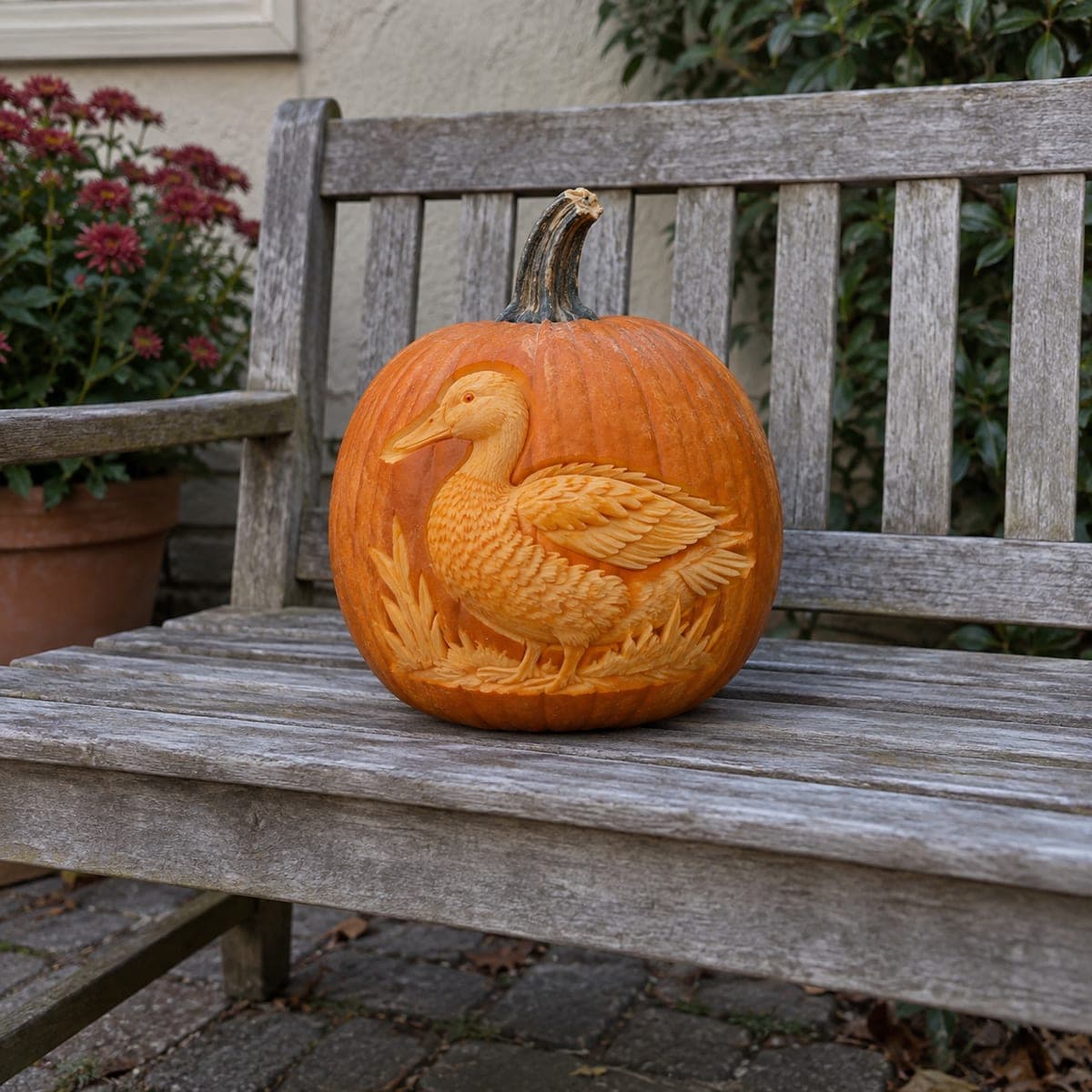
Mallard Duck Portrait Pumpkin Aglow at DuskAI
0

Mallard Duck Portrait Pumpkin Aglow at Dusk

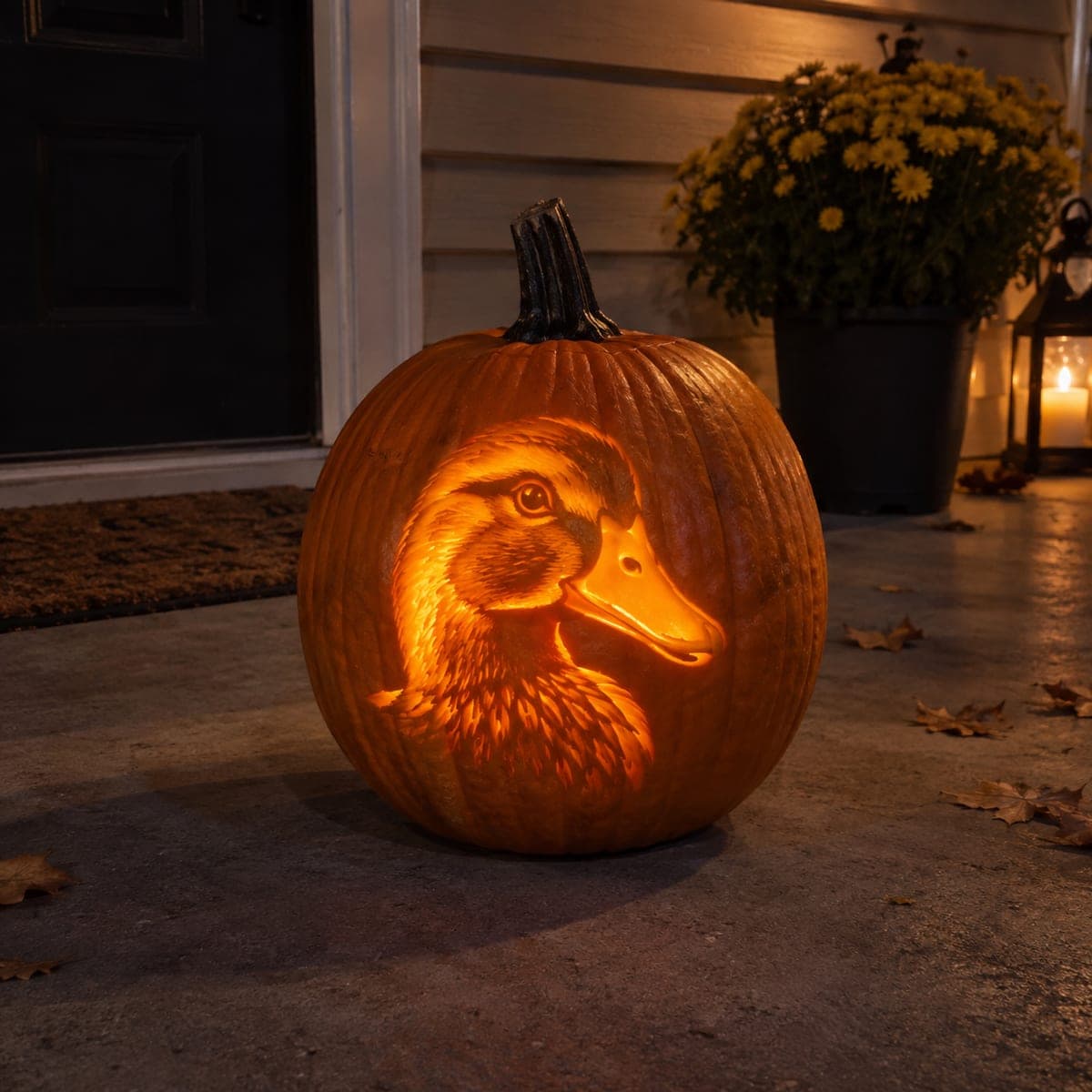
A mallard hen glows from this pumpkin in a remarkably lifelike etched portrait, her feathers, cheek patch, and bill rendered in dozens of graduated shading depths. The thinnest areas around the bill and eye blaze brightest, giving the bird a warm backlit halo after sunset. This is patient loop-tool work, so carve in short sessions, mist the surface to keep it from drying, and finish with a strong LED inside.

This is an AI-generated concept image: a realistic, carvable design idea rather than a photo of a finished carve. AI concepts are always labeled and sit out the leaderboard and the contest.

No ratings yet · Sign in to rate
Comments (0)

  • No comments yet — be the first.

Save without an account. Sign in to like or comment.

Our tips for carving a similar design

The core trick here is depth-based shading: the whole design lives in the pumpkin wall, with feathers, cheek patch, and bill built entirely from how deeply you scrape the skin and flesh. Thinner areas glow brighter, so you plan the bill and eye highlights as your thinnest zones and leave the dark background skin fully intact. A few small full cutouts add the brightest sparkle, but almost all the work is careful loop-tool relief.

Written by PumpkinCarvingIdeas.com, inspired by the image above. These are our suggestions, not instructions from the uploader. This approach to the AI concept has not been tested on a real pumpkin.

From pumpkin to porch

  1. Transfer a mallard portrait stencil

    Pick a shaded duck-head stencil and print it to fit one smooth face of the pumpkin. Tape it flat, then poke or trace the main outlines: head, eye, bill, and the feather masses of the neck. Keep the background area clearly marked so you know what stays untouched. Working from a grayscale reference helps you see where the lightest values fall.

  2. Gut the pumpkin and thin the carving wall

    An adult should cut a lid from the bottom, not the top, so the stem stays intact for display. Scoop the seeds and pulp, then shave the inside of the carving face until the wall is about one inch thick and even. A thinner, consistent wall lets your shading glow more predictably. Work slowly with a sturdy scoop and check thickness by pressing gently.

  3. Establish the darkest and midtone areas

    Leave the background and the deepest shadow feathers as untouched skin so they read dark. With a fine loop tool, peel just the outer skin on the midtone areas of the cheek, crown, and neck for a soft dim orange. Keep your strokes following the direction of the feathers so the texture looks natural. Mist the surface with water during breaks so the flesh does not dry and crumble.

  4. Deepen the bright feathers and bill

    Go back over the lightest zones, the eye ring, the shine on the bill, and the highlighted feather edges, scraping deeper so the wall gets thin and glows warm. Vary your pressure to create the graduated depths that make feathers look soft. Stop often, put a light inside, and check the glow before removing more. You can always scrape deeper, but you cannot add flesh back.

  5. Add a few small full cutouts last

    Save any true cutouts, like a tiny catchlight in the eye or the brightest sparkle on the bill, for the very end. Cut these small openings after all shading is done so the wall stays strong while you work. Keep them tiny and leave thin bridges of skin around them so nothing sags or tears. These points will be the brightest spots in the finished portrait.

  6. Light it and photograph at dusk

    Set a strong warm LED inside, never a candle, since the thin walls and long carving deserve steady even light. Rotate the light to find the angle that fills the bill and eye best. Take your photo at dusk when the surrounding light is low but the sky still holds some color. A quick coat of petroleum jelly on the cut edges slows drying if you want it to last a few extra days.

Gather your supplies

Check things off as you get ready.

Work on a stable surface, keep your free hand out of the cutting path, and have an adult handle sharp tools.

Three levels of light

  • Leave intact

    The background and the deepest shadow feathers behind the head stay as untouched dark skin.

  • Peel & shade

    The cheek, crown, and neck feathers get skin-peeled to a soft dim orange for the midtones.

  • Cut through

    Tiny openings at the eye catchlight and the brightest bill highlight are cut through for sparkle.

Learn the carving basics

Before you start cutting

How thin should the wall be for the glow to work?

Aim for about one inch on the carving face, then thin the brightest feather and bill areas further from the inside or by scraping deeper from the front. The thinner the flesh, the warmer and brighter it glows. Check often with a light inside so you do not accidentally break through.

This is an AI concept image, so can a portrait like this really be carved?

Yes, shaded portrait carving is a real technique done entirely with loop tools and depth changes. No pumpkin was actually carved for this image, so treat it as a design you could recreate. Keep cutouts small and bridged so the thin areas stay structurally sound.

How do I keep the shading from drying out mid-project?

Carve in short sessions and mist the exposed flesh with water whenever you take a break. When you stop for the day, wrap the pumpkin in a damp towel or plastic and refrigerate it. A light coat of petroleum jelly on finished cut edges also slows browning.

Your take belongs here, too.

Changed a detail? Made it simpler? Share a photo of your version and tell the community what worked.

Share your pumpkin

More pumpkins like this

You've reached the end · 8 pumpkins
The Patch Report

Fresh pumpkins, in your inbox.

The best new carvings, ideas worth stealing, and how-tos for carving season. Short, seasonal, and gone by November.

A short email during carving season. Unsubscribe anytime. See our privacy policy.