Halloween Pumpkin Carving Contest · Starts October 1st · $500 in prizes
← Back to ideas
@ai_concepts
Sep 11, 2026
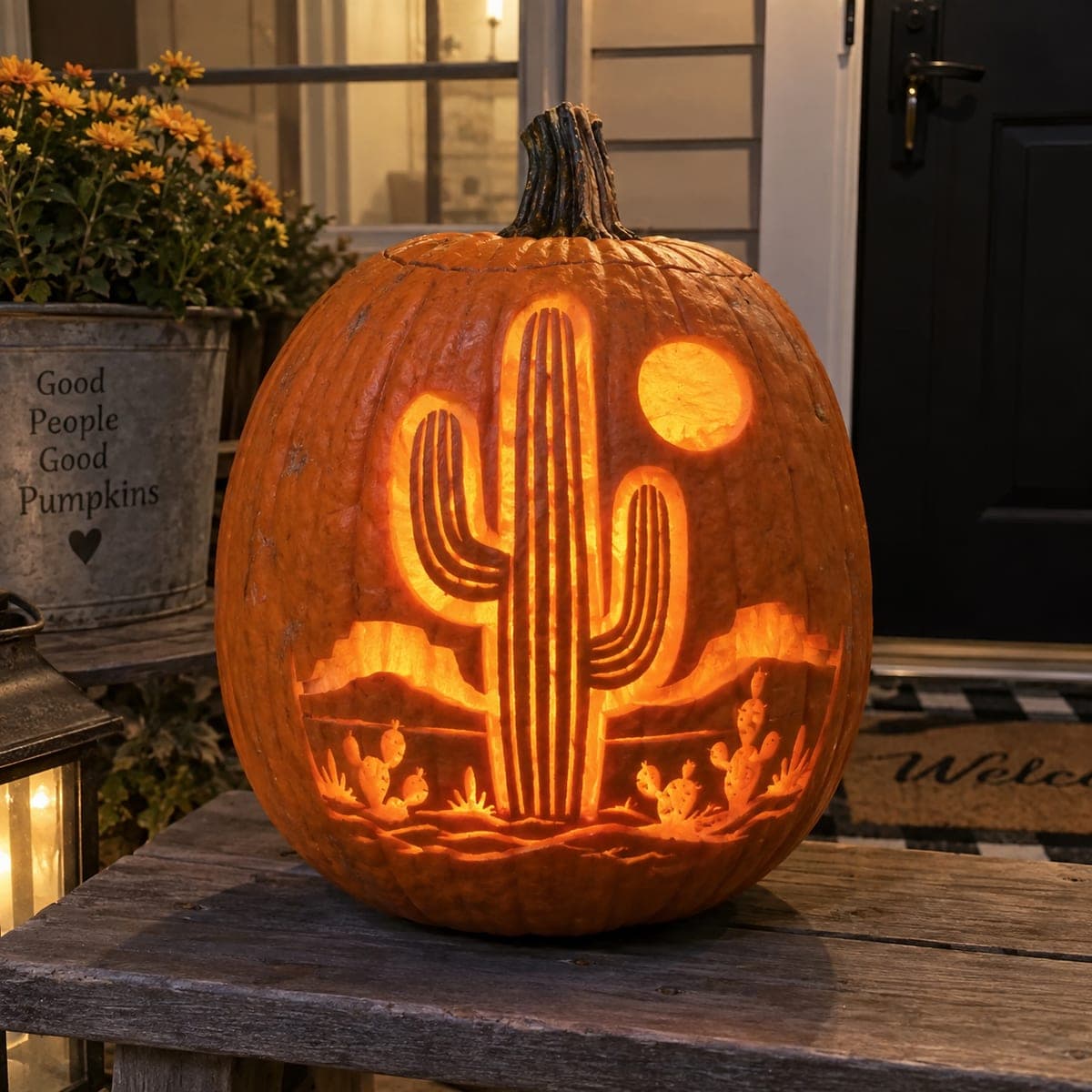
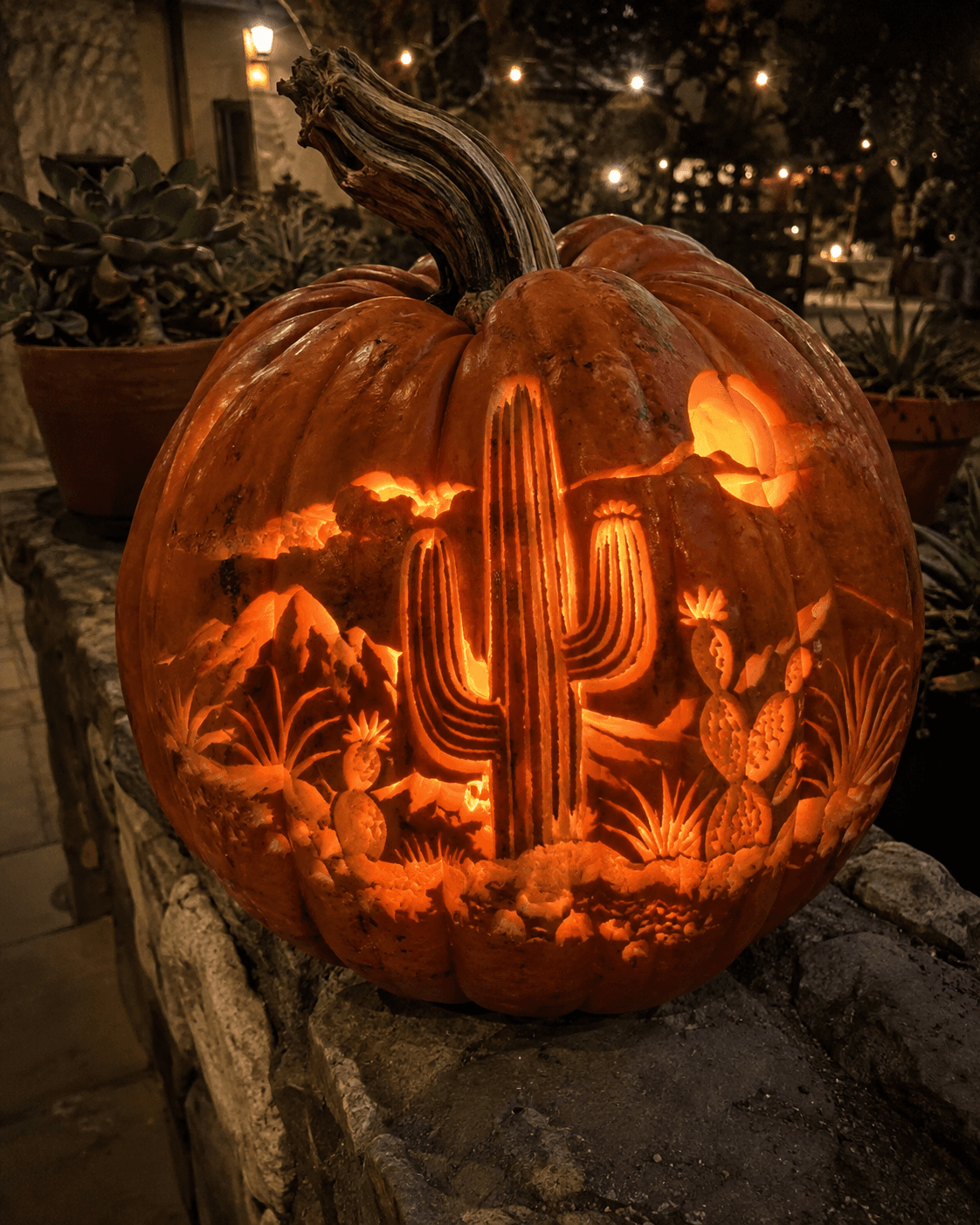
Desert Night Saguaro PumpkinAI
0

Desert Night Saguaro Pumpkin

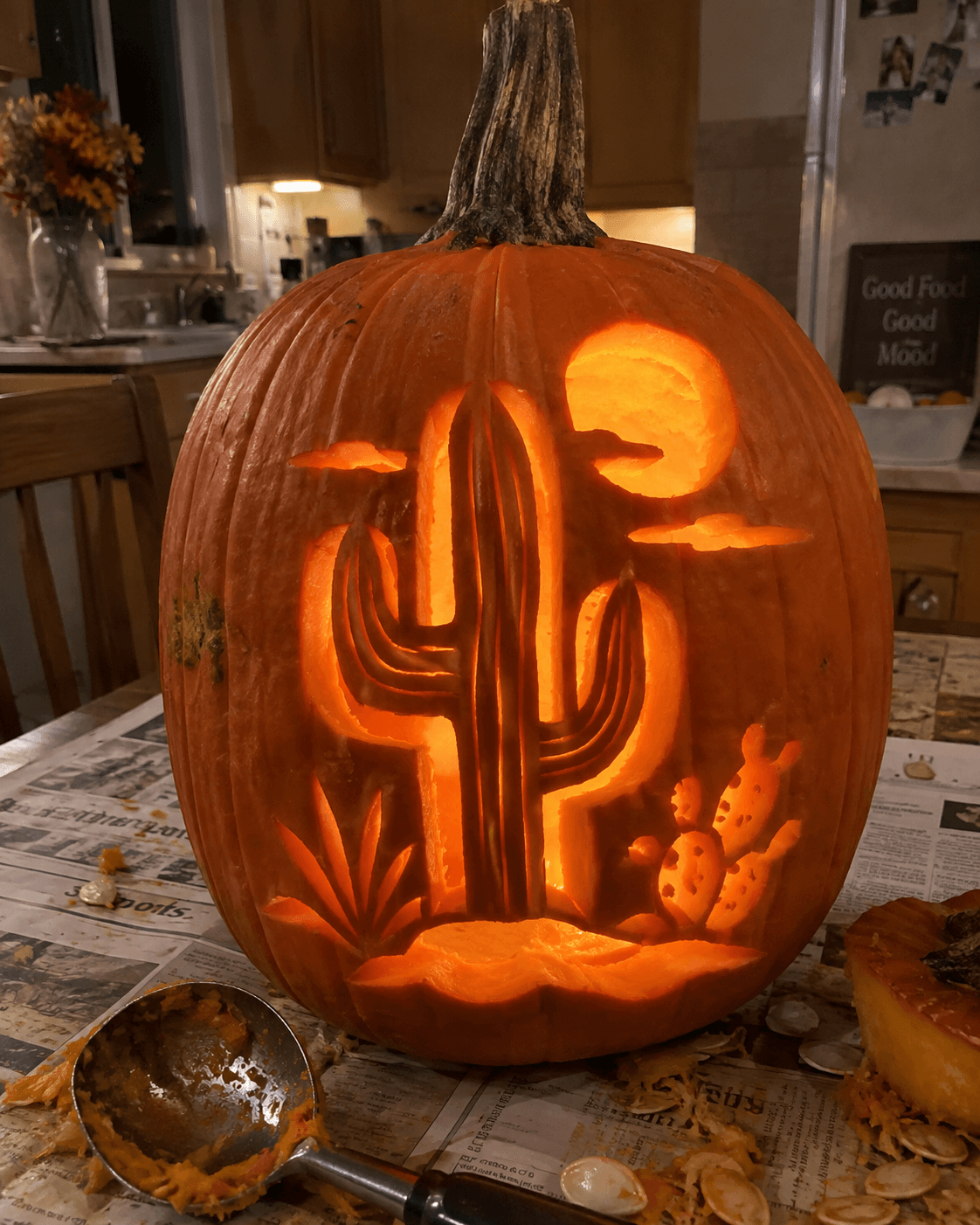
A little desert scene glowing at dusk: a ribbed saguaro standing tall under a full moon with a bird gliding past, drifting clouds, a spiky agave at its feet, and a dotted prickly pear off to the side. The scene is peeled rather than cut through, with the ribs and spines scored into the flesh so every element picks up a different amount of light. More patience than a single cutout, but each piece is simple on its own.

This is an AI-generated concept image: a realistic, carvable design idea rather than a photo of a finished carve. AI concepts are always labeled and sit out the leaderboard and the contest.

No ratings yet · Sign in to rate
Comments (0)

  • No comments yet — be the first.

Save without an account. Sign in to like or comment.

Our tips for carving a similar design

The whole trick here is depth through peeling instead of cutting all the way through. You shave the skin back to different thicknesses so the moon glows bright, the cactus glows softly, and the untouched skin reads as dark background. Score the ribs and spines lightly on top of the peeled areas so each element catches its own amount of light.

Written by PumpkinCarvingIdeas.com, inspired by the image above. These are our suggestions, not instructions from the uploader. This approach to the AI concept has not been tested on a real pumpkin.

From pumpkin to porch

  1. Prep and transfer the scene

    Pick a large, tall pumpkin with a smooth face to give the saguaro room to stand upright. Cut a lid from the bottom or back so the front stays clean, then scoop the walls down to about one inch thick where the shaded areas will be. Tape your stencil on and poke through the outlines of the moon, cactus, clouds, agave, and prickly pear with a pin or awl. Peel the paper and connect the dots lightly with a pencil so you can see every shape before any blade touches the flesh.

  2. Peel the moon for the brightest glow

    Start with the full moon since it should be the most luminous element. Use a ribbon or lino tool to shave the skin off inside the moon circle, going deep so the wall is thin and the light pours through. Keep the edge crisp and round. If you want the moon to be the star, take it thinner than any other peeled area.

  3. Peel the saguaro and cactus bodies

    Shave the skin off the saguaro trunk, arms, agave blades, and prickly pear pads so they glow a soft mid orange. Leave these thicker than the moon so they read dimmer and sit in front of it. Keep your gouge moving in the direction of each shape so the surface stays even. Take your time, since these are the largest peeled zones and set the mood of the whole scene.

  4. Score the ribs, spines, and texture

    Now add detail on top of the peeled surfaces with a small V gouge or knife tip. Run shallow vertical lines down the saguaro for its ribs, add fine spine marks, and press small dots into the prickly pear pads. These score lines only remove a thin layer, so they will glow a touch brighter than the flesh around them. Go light and consistent here, since deep gouges can break through the thin wall.

  5. Leave the background and add the bird

    Do not touch the skin around the cactus and behind the moon so it stays dark and pushes the scene forward. For the small bird gliding past the moon, leave a thin sliver of untouched skin in its silhouette shape while peeling the moon around it. The drifting clouds can be lightly peeled so they read as soft pale streaks against the dark sky.

  6. Cut the openings last, then light it

    Save any true cutouts for the very end, such as a narrow gap under the moon or the ground line at the base, so the pumpkin stays sturdy while you work. Make these small and keep bridges of flesh between the cactus arms so nothing sags. Drop in an LED tea light or a small battery puck, never a candle, and check the balance of light. If an area looks too dark, shave it a little thinner until every element reads.

Gather your supplies

Check things off as you get ready.

Work on a stable surface, keep your free hand out of the cutting path, and have an adult handle sharp tools.

Three levels of light

  • Leave intact

    The night sky around the moon, the space between cactus arms, and the little bird silhouette stay as untouched skin so they read dark.

  • Peel & shade

    The saguaro trunk and arms, agave blades, prickly pear pads, and drifting clouds are peeled to a soft mid glow.

  • Cut through

    Only small accents like a sliver under the moon or the ground line at the base are cut fully through for the brightest points.

Learn the carving basics

Before you start cutting

How do I keep the tall saguaro from looking flat?

Layering the light levels is what gives it depth. Peel the cactus to a mid glow, leave the sky dark behind it, and score the ribs so they catch a little extra light. That contrast makes the saguaro pop forward instead of blending into the background.

Won't the thin peeled wall crack while I score the spines?

It can if you dig too deep, so keep your scoring shallow and let the tool do light passes. Peel the body first to an even thickness, then add spines and dots with just the tip of the blade. Support the wall with your other hand and avoid prying.

This is a concept image, so can a real pumpkin actually look like this?

Yes, this is an editorial idea inspired by an AI concept, and the peeling approach works well on a real pumpkin. Choose a fresh one with a thick, even wall so you have room to shave to different depths. Keep the bird and cactus arms as attached silhouettes rather than fragile floating pieces.

Your take belongs here, too.

Changed a detail? Made it simpler? Share a photo of your version and tell the community what worked.

Share your pumpkin

More pumpkins like this

You've reached the end · 8 pumpkins
The Patch Report

Fresh pumpkins, in your inbox.

The best new carvings, ideas worth stealing, and how-tos for carving season. Short, seasonal, and gone by November.

A short email during carving season. Unsubscribe anytime. See our privacy policy.