Halloween Pumpkin Carving Contest · Starts October 1st · $500 in prizes
← Back to ideas
@ai_concepts
Sep 25, 2026
Sage Brachiosaurus Painted Pumpkin with Mauve LeavesAI
0

Report this carving

Tell us what is wrong. Reports are private.

Sage Brachiosaurus Painted Pumpkin with Mauve Leaves

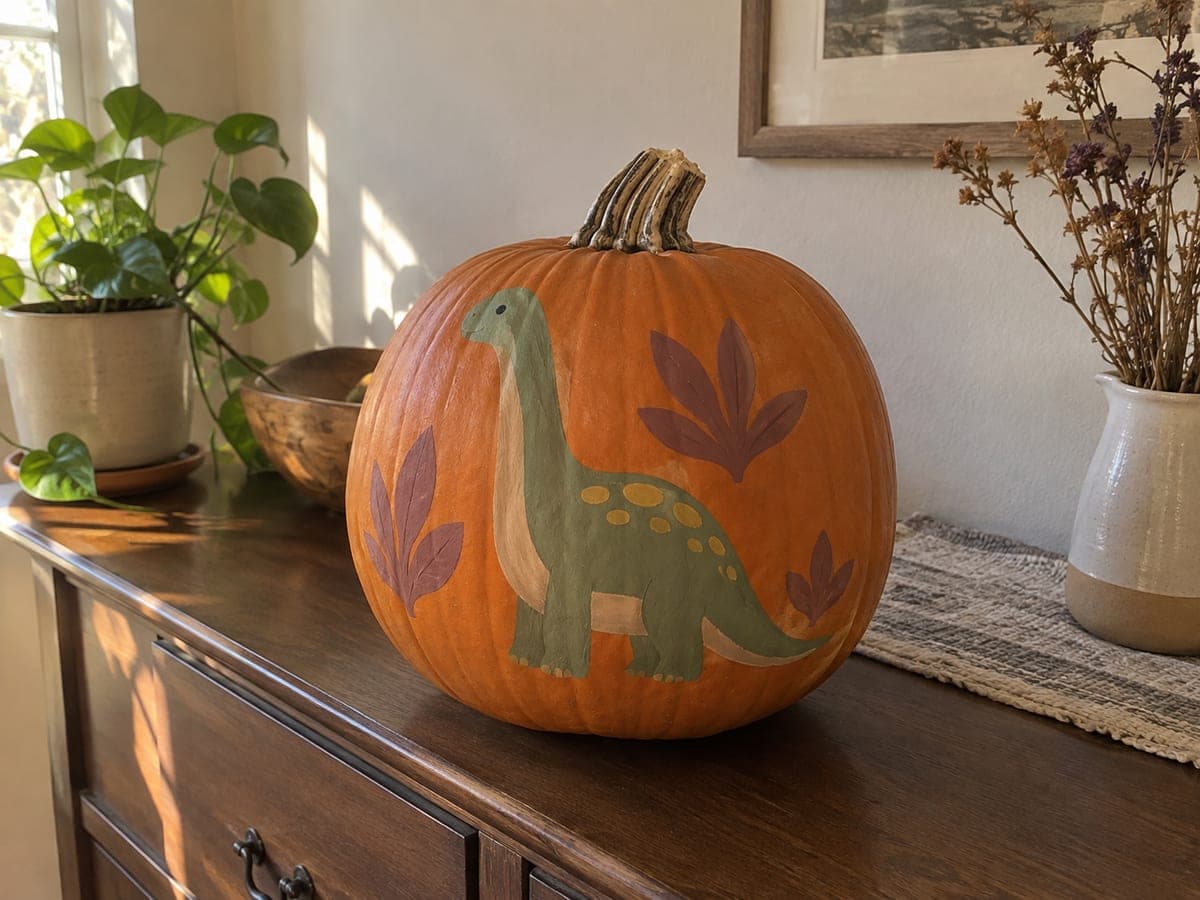
A sage brachiosaurus with mustard back spots, a cream belly patch, a black dot eye, and three broad mauve leaves is painted in child-friendly rounded shapes on an intact pumpkin for this no-carve brachiosaurus pumpkin stencil idea. The mauve leaves arranged around the figure prevent the composition from looking off-center on a large orange surface. Use a wide flat brush for the body and a narrow round brush for the spots and eye. Warm afternoon window light on a dining sideboard shows off the soft color palette beautifully.

No ratings yet · Sign in to rate

Comments (0)

  • No comments yet — be the first.

Save without an account. Sign in to like or comment.

Our tips for carving a similar design

A sage brachiosaurus with mustard back spots, a cream belly patch, a black dot eye, and three broad mauve leaves is painted in simple rounded shapes directly on an intact pumpkin. The three decorative leaves arranged around the dinosaur prevent the design from looking isolated on the large orange surface and give the composition a balanced, playful feel. Broad brushwork for the main body and fine-brush work for the spots and eye keep the technique accessible to first-time pumpkin painters.

From pumpkin to porch

  1. Clean and dry the surface

    Wipe the pumpkin with a barely damp cloth and allow it to dry for fifteen minutes. Any residual moisture or wax prevents the acrylic from bonding to the rind, causing the sage base coat to peel after a day or two.

  2. Sketch the layout

    Lightly pencil in the brachiosaurus outline, positioning the long neck so it rises toward the upper center of the pumpkin face. Mark the approximate positions of the three mauve leaves so they frame the body without crowding the belly detail.

  3. Apply the sage body

    Load a wide flat brush with sage acrylic and fill the body shape in broad, confident strokes. Two thin coats are better than one heavy coat. Allow the first to dry to the touch before adding the second.

  4. Paint the belly patch, spots, and leaves

    Switch to a medium round brush for the cream belly patch on the underside of the torso. Once dry, dab small mustard spots irregularly across the back with the brush tip. Paint the three broad mauve leaf shapes around the body while the spots dry.

  5. Add the eye and final details

    Use a fine liner brush loaded with black acrylic to place a single small dot for the eye. If you want a slightly refined look, add a thin cream highlight dot inside the black eye once it dries.

  6. Seal and display

    Brush matte acrylic medium over the finished design and let it cure for an hour. Display on a dining sideboard under warm afternoon window light, where the soft sage and mauve tones look their best without harsh shadows.

Written with AI to match this design

Gather your supplies

Check things off as you get ready.

Work on a stable surface, keep your free hand out of the cutting path, and have an adult handle sharp tools.

Three levels of light

  • Leave intact

    The bare orange rind around and between all painted shapes stays as the natural background.

  • Peel & shade

    None. This no-carve design keeps the shell completely intact.

  • Cut through

    None. Place the pumpkin near a lamp or window to illuminate the painted design from the front.

Learn the carving basics

Before you start cutting

Sage paint looks very light and transparent over the orange rind. How do I get good coverage?

Mix a small amount of white into your sage paint to boost opacity, or use a dedicated opaque craft paint. Two to three thin coats always beat one thick coat, and a white primer layer under the sage makes the color pop dramatically more.

How large should the mauve leaves be relative to the dinosaur?

Each leaf at roughly one-third the length of the dinosaur body reads as a decorative accent rather than a competing subject. Make them simple oval or teardrop shapes; anything more detailed will draw the eye away from the dinosaur.

Can I use this same palette but swap the dinosaur for a different animal?

Absolutely. The sage, mustard, cream, and mauve combination works with any rounded animal silhouette. A turtle, a whale, or a simple bird all read well in this palette on an orange pumpkin.

Your take belongs here, too.

Changed a detail? Made it simpler? Share a photo of your version and tell the community what worked.

Share your pumpkin

More pumpkins like this

You've reached the end · 8 pumpkins
The Patch Report

Fresh pumpkins, in your inbox.

The best new carvings, ideas worth stealing, and how-tos for carving season. Short, seasonal, and gone by November.

A short email during carving season. Unsubscribe anytime. See our privacy policy.